

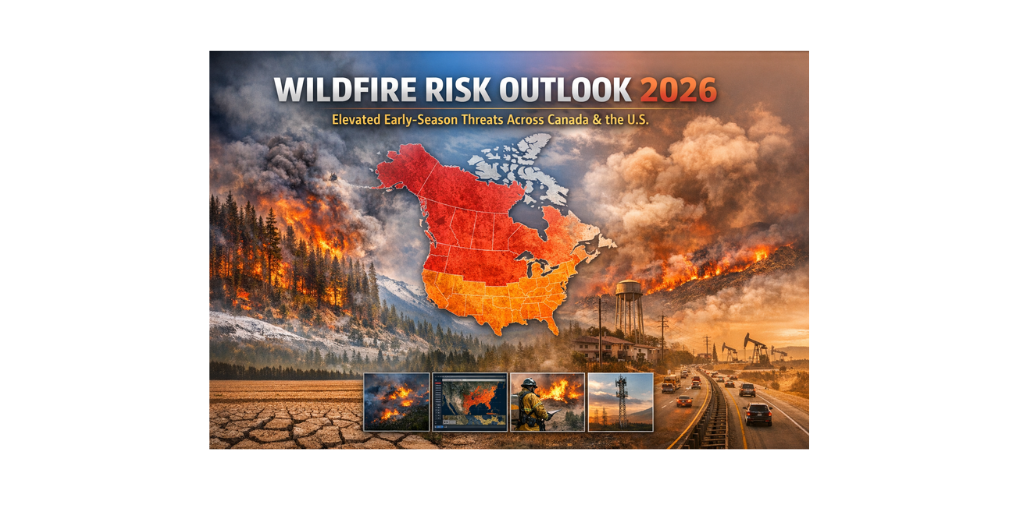


Wildfire risk is already increasing across key regions of North America as environmental conditions create a higher likelihood of early-season fire activity. While overall wildfire potential remains near seasonal averages across the continent, localized areas in western Canada and the southern United States are experiencing elevated wildfire risk due to drought, reduced snowpack, warming temperatures, and exposed fuels.
For businesses, government agencies, and critical infrastructure operators, early-season wildfire risk presents significant operational, safety, and continuity challenges. Organizations with assets, personnel, or operations in high-risk regions should begin implementing proactive wildfire monitoring and preparedness measures now.
Climate Conditions Driving Increased Wildfire Risk in North America
The current wildfire outlook is influenced by a transition away from La Niña weather patterns toward more neutral climate conditions. This transition typically introduces greater variability and increases the likelihood of dry conditions across certain regions, particularly across western Canada and the southern United States.
Several key environmental factors are contributing to elevated wildfire risk:
- Reduced snowpack in key wildfire-prone regions
- Persistent drought conditions across western Canada and much of the United States
- Warmer-than-normal temperatures accelerating fuel drying
- Exposed grasslands and forests vulnerable to ignition
- Increased potential for wind-driven fire spread
These conditions allow fires to ignite more easily and spread more rapidly, particularly in grassland and wildland-urban interface areas.
Canada Wildfire Risk Outlook: Western Canada Showing Early Warning Signs
In Canada, wildfire risk remains broadly near seasonal averages overall, but localized elevated risk is already emerging in western provinces. Southern Alberta is currently one of the highest-risk areas, particularly along the Calgary to Red Deer corridor, where dry grasslands and reduced snow cover have contributed to unusually early wildfire activity.
Additional Canadian wildfire risk areas include:
- Interior British Columbia, including the Okanagan and southeastern valleys
- Southern Rocky Mountain foothills
- Alberta–British Columbia interface regions
- Interior transportation corridors and rural infrastructure zones
These areas face elevated wildfire risk due to exposed fuels, below-normal precipitation, and expected warming trends. Even short periods of warm weather combined with wind events can rapidly increase fire danger and create fast-moving grassfires near populated areas and infrastructure.
Although higher elevation snowpack may provide some moisture protection later in the season, low-elevation areas, including grasslands, valleys, and transportation corridors, remain highly vulnerable to early wildfire ignition.
United States Wildfire Risk Outlook: Elevated Threat Across Southern and Southeastern Regions
Wildfire risk across the United States is more clearly elevated during the February through April period, particularly across the southern tier of the country.
Regions facing the highest wildfire risk include:
- Texas, Oklahoma, and Kansas (Southern Plains)
- Arizona, New Mexico, and Colorado Front Range
- Florida and Southeast coastal states
- Gulf Coast states, including Louisiana, Mississippi, and Alabama
- Southern California and western interior regions
Drought conditions now affect nearly half of the United States, and precipitation deficits combined with above-average temperatures are accelerating fuel drying. Florida has already seen increased wildfire activity, with drought and dry vegetation creating receptive fire conditions.
March is expected to represent the peak early wildfire risk period, with above-normal fire potential across much of the southern United States before gradually transitioning toward more localized risk in southeastern coastal regions during April.
Critical Infrastructure and Business Continuity Risks from Wildfires
Wildfires present a wide range of risks to organizations beyond the immediate fire zone. Even fires located dozens or hundreds of kilometers away can disrupt operations through indirect impacts.
Key wildfire-related business risks include:
- Evacuations affecting facilities, offices, and operational sites
- Power outages and damage to electrical infrastructure
- Telecommunications disruptions affecting communications systems
- Transportation closures impacting supply chains and logistics
- Air quality deterioration affecting employee health and productivity
- Increased safety risks for employees working outdoors or in exposed areas
Critical infrastructure sectors, including energy, utilities, healthcare, transportation, and telecommunications, are particularly vulnerable to wildfire-related disruptions. Grassfires, in particular, can spread rapidly and often occur near roadways, rail lines, and populated areas, increasing the risk to infrastructure and communities.
Early Warning and Intelligence Monitoring: A Key Risk Mitigation Tool
Wildfire risk can develop rapidly, often with limited warning. Early detection and real-time monitoring provide organizations with the ability to respond quickly and reduce operational risk.
The BlueSky Risk Intelligence team actively monitors wildfire conditions across North America using:
- Satellite-based detection systems
- Federal, provincial, and state wildfire service data
- Environmental and weather monitoring platforms
- Open-source intelligence and real-time reporting
- Analyst verification and risk assessment
This intelligence-driven approach allows organizations to identify emerging wildfire threats early, assess risk exposure, and take proactive measures to protect personnel and assets.
Key Wildfire Risk Triggers Organizations Should Monitor
Organizations should monitor the following wildfire risk indicators across Canada and the United States:
Canada
- Reduced snowpack and dry grasslands in Alberta and British Columbia
- Rapid warming trends accelerating fuel curing
- Persistent drought conditions in western provinces
- Wind events capable of accelerating fire spread
United States
- Expanding drought conditions across southern Plains and Southeast
- Below-normal precipitation across southern and coastal regions
- Elevated temperatures increasing ignition potential
- Increased fire activity in wildland-urban interface zones
Monitoring these indicators allows organizations to anticipate wildfire threats before they directly impact operations.
Preparing for the 2026 Wildfire Season: Proactive Risk Management Is Essential
The early stages of the 2026 wildfire season are already demonstrating elevated localized risk across North America. While widespread extreme wildfire activity is not yet occurring, early warning indicators suggest increased potential for disruption in key regions.
Organizations should take proactive steps now to:
- Monitor wildfire risk near facilities and operational areas
- Review emergency response and evacuation plans
- Identify vulnerabilities in critical infrastructure and operations
- Ensure access to real-time situational awareness and intelligence
Early preparedness significantly reduces the operational and safety risks associated with wildfire threats.
BlueSky Risk Intelligence: Real-Time Wildfire Monitoring and Early Warning
BlueSky Risk Intelligence Monitoring, from the experts at Paladin Risk Solutions, provides organizations across Canada and the United States with real-time wildfire intelligence, early warning alerts, and actionable situational awareness.
By combining advanced monitoring technology with experienced intelligence analysts, BlueSky delivers verified, actionable intelligence that allows organizations to:
- Anticipate wildfire threats
- Protect personnel and infrastructure
- Maintain operational continuity
- Respond quickly to emerging wildfire incidents
As wildfire conditions continue to evolve, access to timely intelligence remains critical to effective risk management and operational resilience. If you would like access to our full intelligence report, please reach out to our BlueSky team directly.
BlueSky Risk Intelligence Monitoring is a comprehensive, all-hazards intelligence program designed to provide organizations with timely, actionable intelligence on evolving risks and threats that may impact their personnel, assets, and operations. The program combines advanced monitoring technology with experienced intelligence analysts to identify, analyze, and contextualize emerging issues, including wildfires, protests and activism, crime trends, geopolitical developments, severe weather, and other operational disruptions. By delivering analyst-verified intelligence and strategic insight, BlueSky enables clients to enhance situational awareness, anticipate risk exposure, and make informed decisions to protect their organization and maintain operational resilience.